How to Stop Your Nib Catching the Paper and Spraying Ink
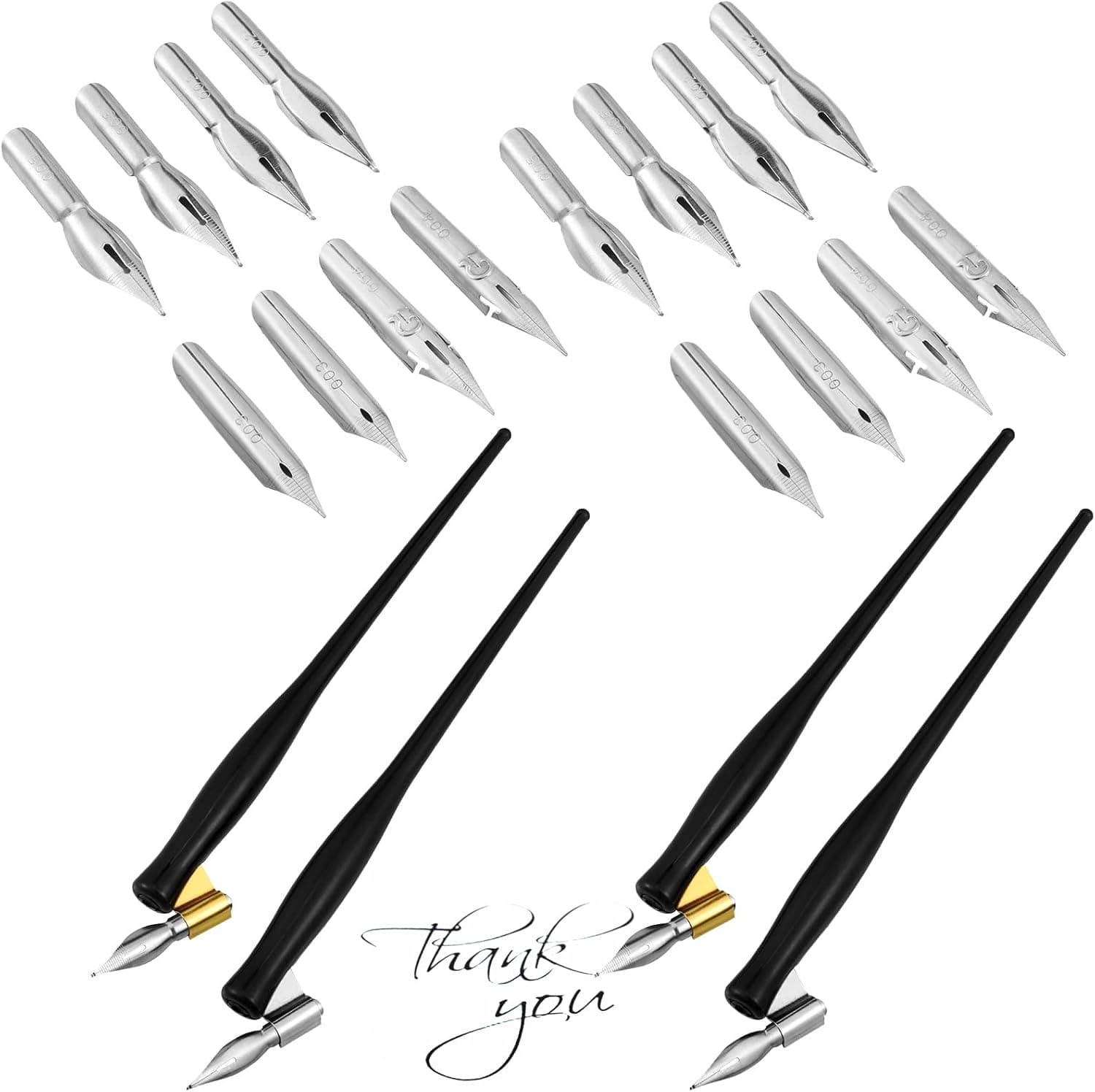
Pointed pen calligraphy relies on sharp, flexible nibs that create beautiful thick and thin strokes, but sharp nibs can also snag on paper fibres. When a nib catches, it often springs free and flicks tiny splatters of ink across the page, ruining practice sheets and finished pieces. The problem usually comes from nib angle, pressure on upstrokes, rough paper or a nib that is too sharp for the task.
Reduce pressure on upstrokes
In pointed pen scripts, downstrokes use pressure to spread the tines, while upstrokes should be almost weightless. Pressing on upstrokes pushes the sharp tines into the paper, where they catch fibres and spring back.
Practice light, relaxed upstrokes with drills, moving slowly at first. Letting the nib glide rather than push forward reduces snagging significantly.
Adjust your pen angle
Holding the pen too steeply makes the tines dig into paper, especially on upstrokes and curves. Lower the pen slightly so the nib moves across the surface smoothly.
Both tines should contact the paper evenly. If the nib is twisted in the holder or your hand rotates during strokes, one tine may lead and catch. An oblique holder helps many right-handed writers keep the nib aligned with the slant of letters.
Choose smoother paper
Rough, textured or low-quality papers have loose fibres that nibs catch easily. Smooth paper, such as laser printer paper suited for fountain pens or calligraphy practice pads, gives cleaner strokes.
If fibres collect on the nib, clean it frequently. Some decorative cardstocks look beautiful but are difficult for sharp nibs, so test before starting a finished piece.
Pick a suitable nib
Very sharp and flexible nibs create fine hairlines but are more prone to catching. Beginners often do better with sturdier, slightly less sharp nibs while developing pressure control.
Larger lettering and rough paper work better with firmer nibs. Keep a few nib types so you can choose one suited to the paper and style.
Check the nib condition
Bent tines, spread tines or burrs on the tip catch paper. Look at the nib under magnification and replace it if the tines no longer meet or appear misaligned.
Dropping a pen can bend the nib point. Store holders with nibs removed or capped to protect them.
Clean up small splatters
For practice sheets, splatters are part of learning. For finished pieces, some small dots can be carefully lifted with a fine blade after drying on durable paper, or covered with white gouache on white paper.
Work slowly on final pieces, use guide sheets and warm up with drills before starting. Warming up reduces tension in your hand and makes smooth strokes more consistent.