Why Ink Will Not Flow From Your Dip Pen and How to Fix It
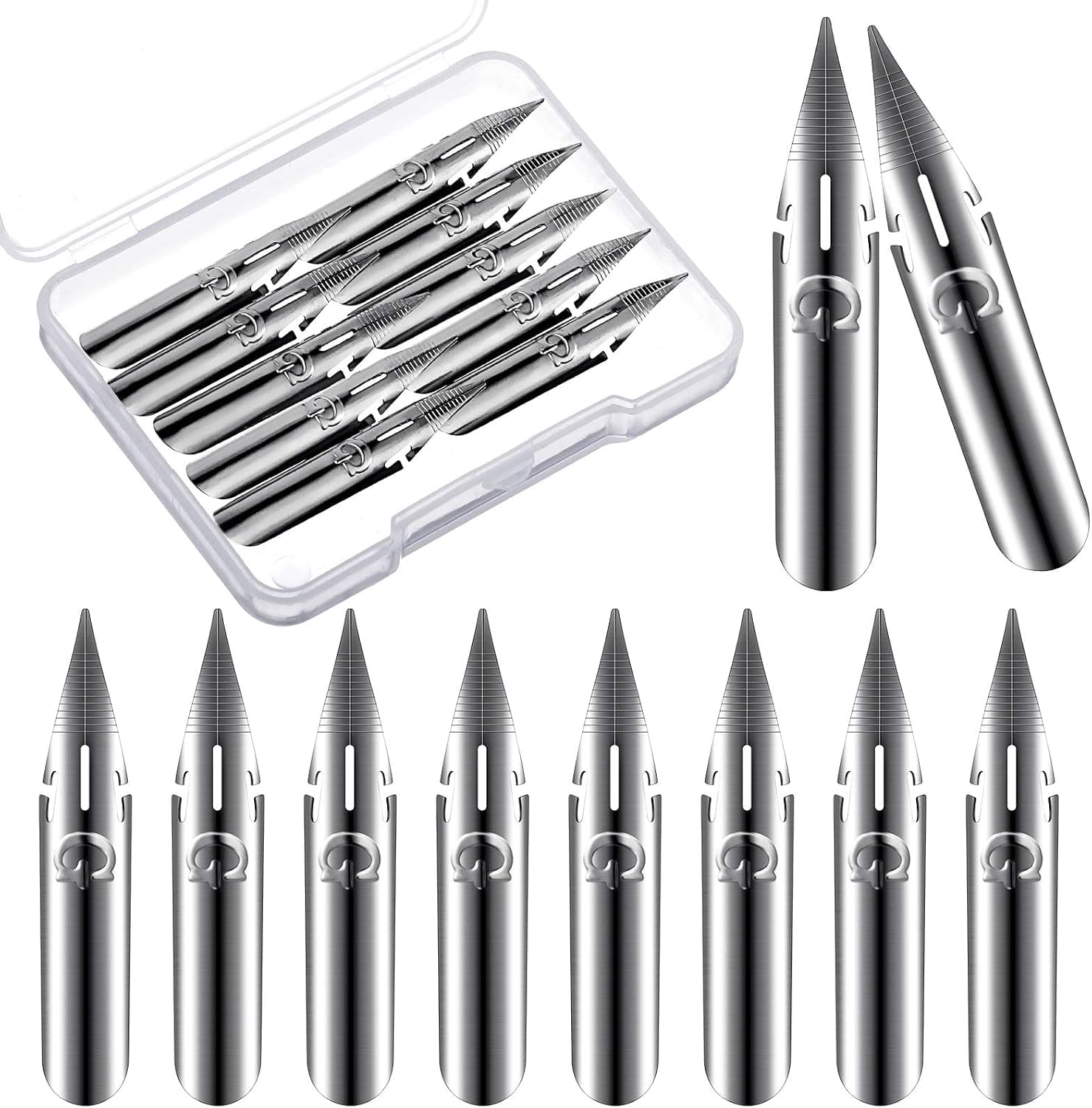
New calligraphers often dip a brand new nib into ink and find the ink beads up and rolls off, or that the first stroke starts well and then runs dry. Most of the time the nib is not faulty. New nibs are coated with a protective oil that repels ink, and ink consistency, loading technique and nib angle also affect flow. A few minutes of preparation usually solves the problem completely.
Remove the factory coating
Manufacturers coat steel nibs with oil or lacquer to prevent rust during storage. Ink cannot cling to this coating, so it forms droplets and slides off rather than filling the vent and slit.
Clean new nibs gently before first use. Common methods include wiping with a little dish soap and warm water, rubbing alcohol, or a specialised nib cleaner, then drying thoroughly. Some calligraphers pass the nib briefly through a flame, but this can affect the metal's temper, so gentle cleaning is the safer choice for beginners.
Load ink correctly
Dip the nib just past the vent hole, the small opening in the middle of the nib, so the reservoir fills. Dipping too deep coats the holder and causes blobs, while dipping too shallow leaves little ink for longer strokes.
Tap or wipe gently against the edge of the ink jar to remove excess drops. Some calligraphers load ink with a small brush or dropper instead of dipping, which gives more control and keeps holders cleaner.
Check ink consistency
Ink that is too thick clings to the nib but will not flow down the slit, causing skips and dry starts. Add a few drops of distilled water, stir well and test again.
Ink that is too thin flows too quickly, floods hairlines and bleeds into paper. Leave the ink jar open for a while to thicken slightly, or add a small amount of gum arabic where the ink manufacturer allows. Always test on the paper you plan to use.
Hold the pen at the right angle
Holding the pen too upright stops ink from reaching the paper smoothly and can make the nib dig in. A lower, consistent angle helps the tines release ink evenly.
Make sure both tines touch the paper equally. If one tine lifts on upstrokes, the nib may skip. Oblique holders help right-handed writers keep nib alignment for pointed pen scripts.
Keep the nib clean during writing
Dried ink builds up around the vent and slit during practice and blocks flow. Rinse the nib in water every few minutes, wipe it with a lint-free cloth and reload.
Gum arabic, metallic particles and pigmented inks dry faster on nibs. Clean more often when using white, gold or gouache-based inks.
Know when to replace a nib
Nibs wear out or get damaged, especially when pressed too hard or dropped. Spread tines that will not close, bent points and rust spots cause persistent flow problems.
Keep spare nibs of your favourite type. Beginners often go through nibs quickly while learning pressure control, which is completely normal.