Calligraphy for Beginners
As an Amazon Associate I earn from qualifying purchases.
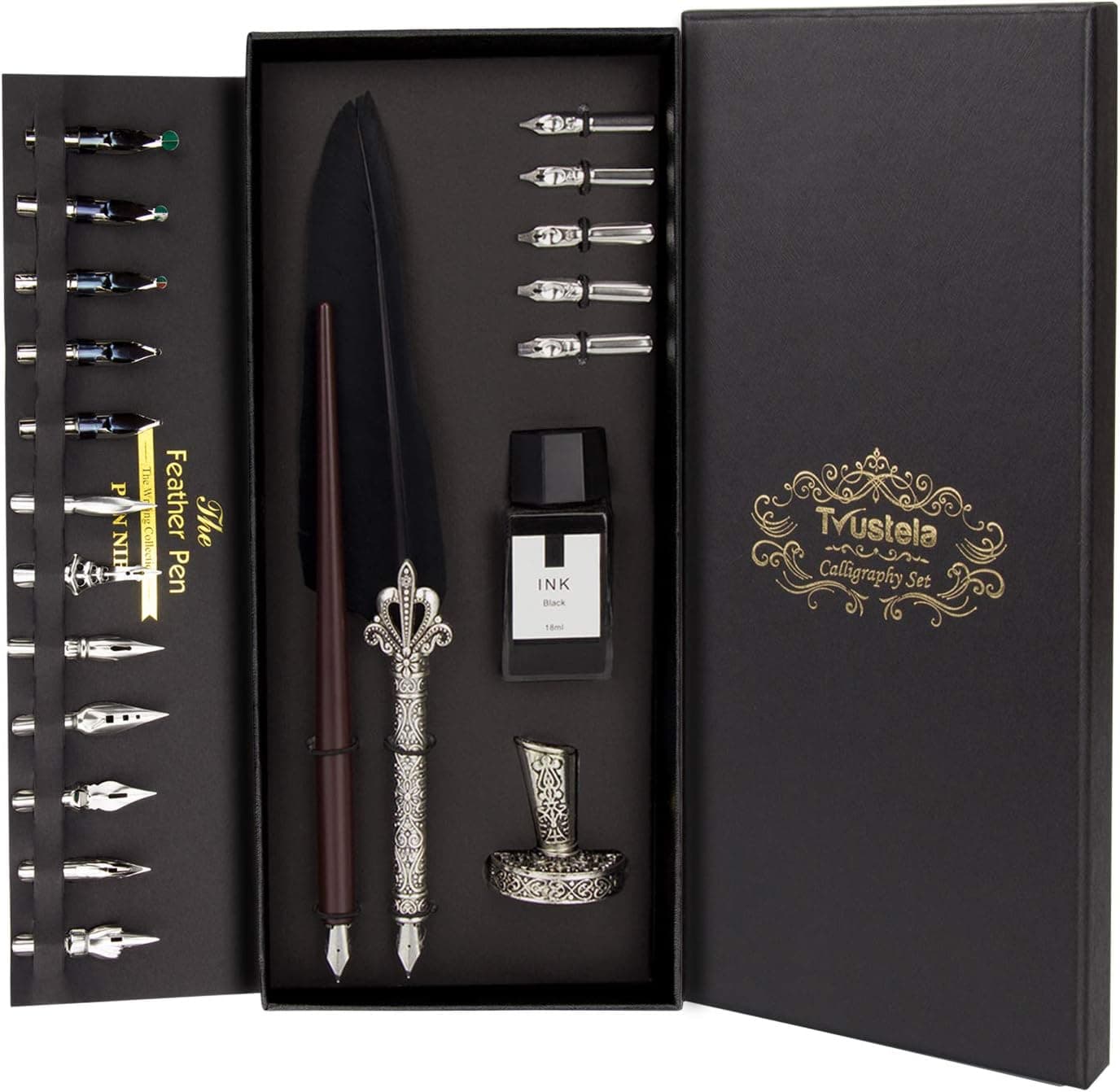
Calligraphy looks intimidating from the outside, but the truth is that every flourished envelope and elegant wedding invitation you have ever admired was built from a small set of repeatable strokes. Nobody is born with beautiful handwriting, and plenty of accomplished calligraphers will happily show you their messy everyday scrawl. The skill you are learning is not handwriting at all. It is drawing letterforms slowly and deliberately, which means anyone with patience and a pen can get there.
The first decision is which style to start with, and for most people the answer is modern brush lettering. It requires only a single brush pen and smooth paper, it forgives small wobbles because the style itself is casual, and it teaches the core principle that underpins every script: thin upstrokes, thick downstrokes. Pointed pen scripts like copperplate are wonderful, but they add ink, nibs, and holder angle to the list of things you are juggling. Learn pressure control first with a brush pen, then graduate to the dip pen if the traditional look calls to you.
Your starter kit should be small on purpose. One large brush pen such as a Tombow Dual Brush or a Karin marker, one small brush pen such as a Tombow Fudenosuke or Pentel Sign, and a pad of smooth HP LaserJet-style printer paper of at least 32 lb weight. That is genuinely all you need for the first month. Buying a forty-piece set feels productive, but it mostly produces decision fatigue and a drawer of dried-out markers. Add supplies when a specific project demands them, not before.
Structure matters more than talent in the early weeks. Spend your first sessions only on drills: rows of downstrokes, upstrokes, ovals, and the basic stroke shapes that combine into letters. It feels tedious, but letters are just drills glued together, and shaky drills produce shaky alphabets. After a week or two of strokes, work through the lowercase alphabet in small groups of similar letters. The letters i, t, and l share bones, as do a, d, and g. Learning them in families builds muscle memory faster than running a to z in order.
Expect a specific emotional arc. Days one through five usually feel exciting, then somewhere in week two your eyes improve faster than your hands and everything you make suddenly looks wrong. This gap between taste and skill is where most people quit, and it is exactly the moment to keep going, because the frustration means your judgment is developing. Keep your first practice sheets in a folder. Comparing week six to week one is the cheapest motivation available and it works every single time.
Finally, practice small and often rather than long and rarely. Fifteen focused minutes a day beats a three-hour Sunday marathon, because motor skills consolidate between sessions, not during them. Put your pen and paper somewhere visible, attach practice to an existing habit like your morning coffee, and lower the bar on bad days to a single row of strokes. Calligraphy rewards consistency with visible progress within weeks, and that early feedback loop is what turns a hobby experiment into a lasting craft.