Brush Pen Lettering Practice Book: Modern Calligraphy Drills, Measured Guidelines and Practice Sheets (Grace Song) Review (2026)
Updated September 21, 2026 · Research-based review
Our verdict
Grace Song's companion practice book pairs measured guideline pages with structured brush pen drills, making it a methodical workbook for learning modern calligraphy. Writing directly in the book uses up pages, so plan to photocopy sheets if you want to repeat drills, but the guided structure suits self-taught letterers well.
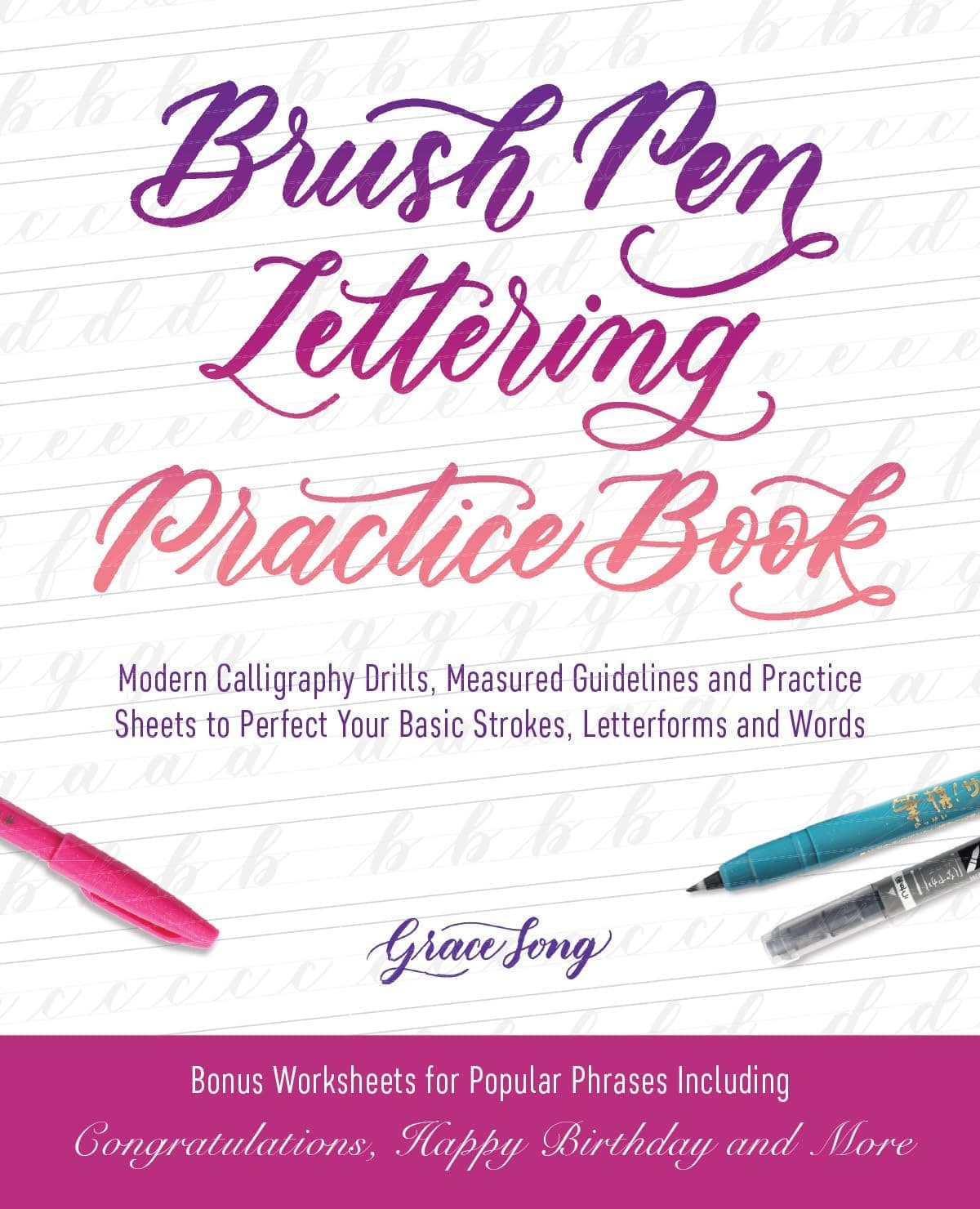
Grace Song's Brush Pen Lettering Practice Book with modern calligraphy drills, measured guidelines and practice sheets.
Price range: See on Amazon
What we liked
- + Measured guidelines take the guesswork out of consistent letter height
- + Structured drills build brush pen pressure control step by step
- + Grace Song's approachable teaching style suits self-taught letterers
Trade-offs
- - Writing directly in the book uses it up, so photocopying pages helps
- - Practice sheets are sized for one approach and may not fit tiny tips
What the book covers
This is a practice workbook by Grace Song, published as a companion to her earlier instructional book Brush Pen Lettering. Rather than teaching technique from scratch, it is built around drills, measured guideline pages, and practice sheets meant to be worked through directly with a brush pen in hand. The book runs 128 pages and is sized at 7.5 by 9.25 inches, a format large enough to give real working space per page while still being comfortable to keep open flat on a desk during practice sessions. It focuses specifically on modern brush calligraphy rather than pointed pen or broad-edge scripts like Copperplate.
Measured guidelines
The defining feature of this workbook is its use of measured, pre-printed guidelines on the practice pages, which take away the guesswork of figuring out consistent letter height, slant, and spacing on blank paper. For someone learning brush lettering without an instructor, inconsistent sizing is one of the most common early struggles, and guided lines give immediate visual feedback on whether strokes are staying even from one line to the next. This structure is particularly useful for basic strokes and repetitive letterform drills, where consistency matters more than free expression, before a letterer moves on to composing full words and phrases with more personal flair.
Drill-based structure
Song organizes the practice sheets as a sequence of drills, starting with basic strokes and building toward full letterforms and words, which mirrors how many in-person calligraphy classes are structured for new students. This step-by-step build lets a self-taught learner follow a logical order rather than jumping straight into full alphabets without the underlying stroke control needed first. Because Song is also the author of the original instructional book this workbook pairs with, using both together gives more context on technique, though the workbook is written to stand reasonably well on its own for someone who already has basic brush pen familiarity from prior practice.
Practical considerations
Because the drills are printed directly onto the practice pages, writing in the book permanently uses up that page, and repeating a drill multiple times means either buying a second copy or photocopying pages before writing on them, which some letterers set up as a habit from the very start of working through the book. The guideline sizing throughout is set for one general approach to brush lettering, so users working with very fine or very broad brush tips outside that range may find the printed spacing does not match their pen's natural stroke width as closely as it would for a mid-size standard brush pen.
Who it suits
This book is best suited to someone who already owns a brush pen and wants a structured, guided way to practice rather than improvising drills from online references or social media tutorials. Its approachable teaching style and measured guidelines make it a good fit for self-taught letterers who want the discipline of a workbook without enrolling in a class or course. Letterers who prefer freeform practice on blank paper, or who already have an established personal drill routine built up over months of practice, may get less value from the pre-set guideline structure than someone starting fresh with brush calligraphy and needing more direction.
Frequently asked questions
How many pages does this workbook have?
It runs 128 pages, sized at 7.5 by 9.25 inches.
Do I need Grace Song's other book to use this one?
No, this workbook is designed to stand on its own, though it pairs with her earlier instructional book Brush Pen Lettering for more technique context.
Can I reuse the practice pages more than once?
The drills are printed directly on the pages, so writing on them uses that page up; many users photocopy pages first if they want to repeat a drill.
Is this workbook for brush pens or pointed pen calligraphy?
It is focused specifically on modern brush pen calligraphy, not pointed pen or broad-edge scripts.
Prices change often, so check the current price and availability on Amazon.
Check price on AmazonCalligraphy Nest may earn a commission from the link above.