The Complete Book of Calligraphy & Lettering: A Comprehensive Guide to More Than 100 Traditional Techniques Review (2026)
Updated September 14, 2026 · Research-based review
Our verdict
This 239-page hardcover from four calligraphers covers more than 100 traditional techniques spanning italic, gothic, uncial and related historical scripts. It rewards a learner who wants real structural grounding in classical lettering, though its scope can overwhelm someone wanting a quick start in casual brush lettering.
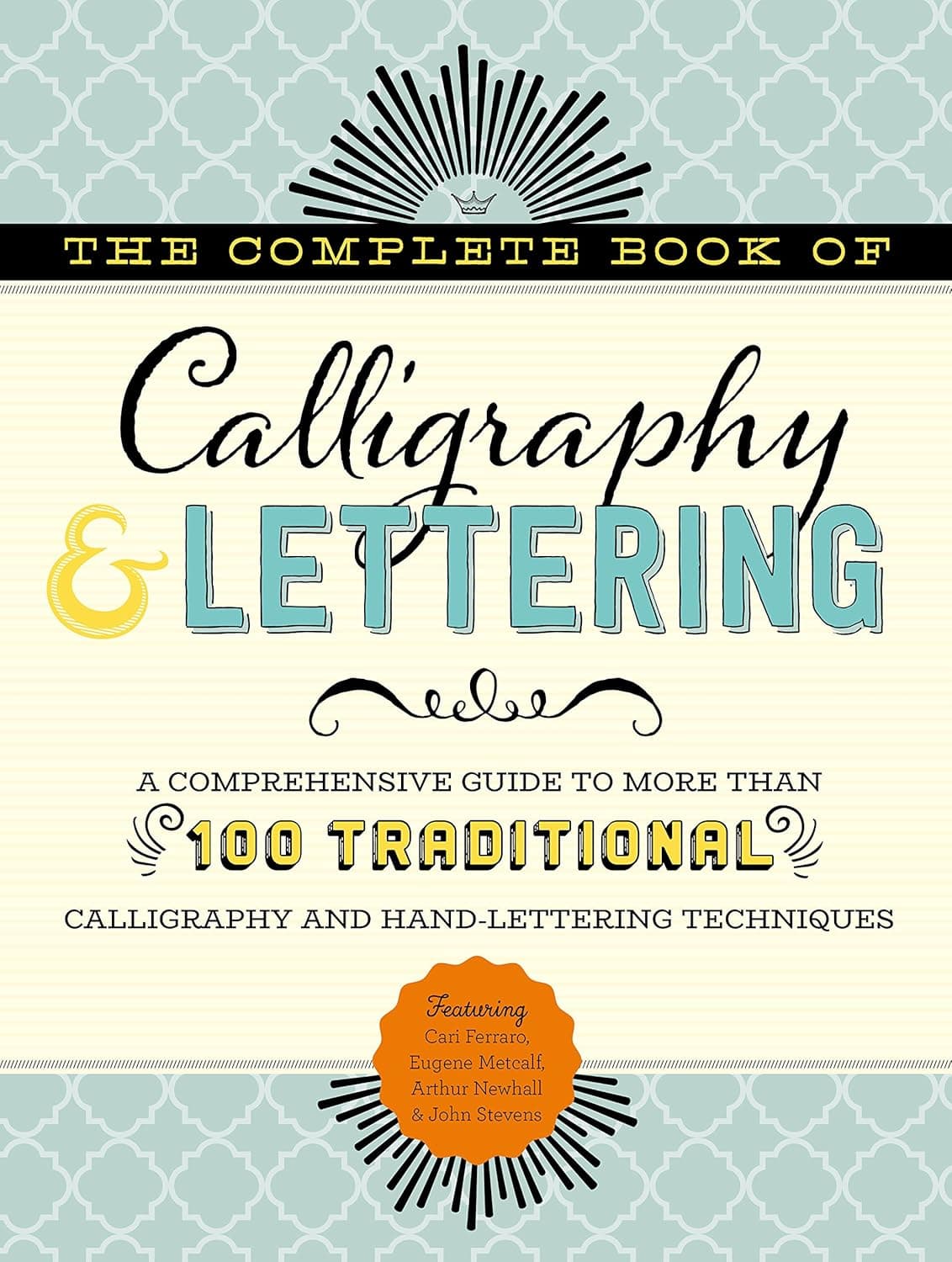
The Complete Book of Calligraphy & Lettering, a comprehensive guide to more than 100 traditional techniques.
Price range: See on Amazon
What we liked
- + More than 100 techniques cover italic, gothic, uncial and more
- + Comprehensive reference suits learners going beyond modern script
- + Traditional focus teaches structure that improves all lettering
Trade-offs
- - Dense content can overwhelm casual beginners
- - Traditional styles may not match modern brush lettering goals
What this book actually covers
The Complete Book of Calligraphy and Lettering is a 239-page, full-color hardcover published by Quarto's Walter Foster imprint, credited to four contributing authors, Cari Ferraro, Eugene Metcalf, Arthur Newhall and John Stevens, each bringing expertise in different lettering traditions. Its stated scope is more than 100 traditional calligraphy and hand-lettering techniques, positioning it as a broad reference rather than a single-style workbook. The large format, roughly 9.25 by 12.5 inches, gives room for full-page exemplar alphabets and step-by-step technique spreads, which matters for a subject where precise letterform proportions are easy to misread in a cramped layout.
A traditional, structural approach to lettering
Because the book leans on historical scripts like italic, gothic and uncial rather than starting from modern brush lettering trends, it teaches the underlying structure, stroke order, pen angle and proportion rules that these traditions are built on. That structural grounding tends to improve a letterer's control even in styles the book does not directly cover, since concepts like consistent x-height, letter slant and stroke contrast carry over to brush pen and digital lettering alike. Readers coming from a purely decorative or trend-driven lettering background may find this more academic than the quick tutorials common on social media, but that depth is also the book's main selling point for serious students.
Who gets the most out of the multi-author format
With four contributing calligraphers rather than one author, different sections likely carry each contributor's own teaching voice and specialty script, which can make the book feel less like a single linear course and more like a curated reference you dip into for a specific technique. This format suits a learner who already has some lettering basics and wants to expand into unfamiliar historical scripts, or an instructor looking for a comprehensive classroom reference. It is a less natural fit for an absolute beginner who has never picked up a pen for lettering and wants a single, gradual, hand-held course from first pen stroke to finished alphabet.
How it compares with beginner-focused lettering books
Workbooks built specifically for beginners, such as step-by-step spiral-bound calligraphy guides or interactive practice-page workbooks, focus narrowly on modern brush lettering with guided drills and less historical context, making them an easier on-ramp for someone brand new to the hobby and unsure whether they will stick with it. Guides to digital hand lettering take yet another direction entirely, teaching tablet and software workflows rather than traditional pen and ink technique. The Complete Book of Calligraphy and Lettering distinguishes itself from all of these by prioritizing breadth and historical accuracy over a single, streamlined beginner path, which is a strength for reference use and a drawback for someone wanting the fastest route to a first finished alphabet.
Verdict and who should pick a different book
At our score of 8.8 out of 10, this is a substantial, well-illustrated reference for anyone serious about building real calligraphic skill across multiple traditional scripts, and its four-author, 100-plus-technique scope is hard to match in a single volume of this size. Choose it if you want to go beyond casual brush lettering into structured, historical calligraphy with proper technique grounding, or if you are an instructor who wants one comprehensive classroom reference. Look elsewhere, toward a beginner-focused spiral workbook or a modern brush lettering guide, if you want a gentler, single-style starting point before tackling a dense, multi-script reference book like this one.
Frequently asked questions
How many techniques does this book cover
The book is described as covering more than 100 traditional calligraphy and hand-lettering techniques across several historical scripts.
Who wrote this book
It is credited to four contributing authors, Cari Ferraro, Eugene Metcalf, Arthur Newhall and John Stevens, each covering different lettering traditions.
Is this a good book for someone brand new to calligraphy
It can work as a reference, but its historical and structural focus makes it denser than a beginner-only workbook, so a total newcomer may prefer a simpler, single-style guide first.
Does the book focus on modern brush lettering or traditional scripts
It focuses on traditional scripts such as italic, gothic and uncial rather than modern brush lettering, though the structural skills it teaches carry over to modern styles.
Prices change often, so check the current price and availability on Amazon.
Check price on AmazonCalligraphy Nest may earn a commission from the link above.