How to Practice Calligraphy Effectively (Not Just Often)
As an Amazon Associate I earn from qualifying purchases.
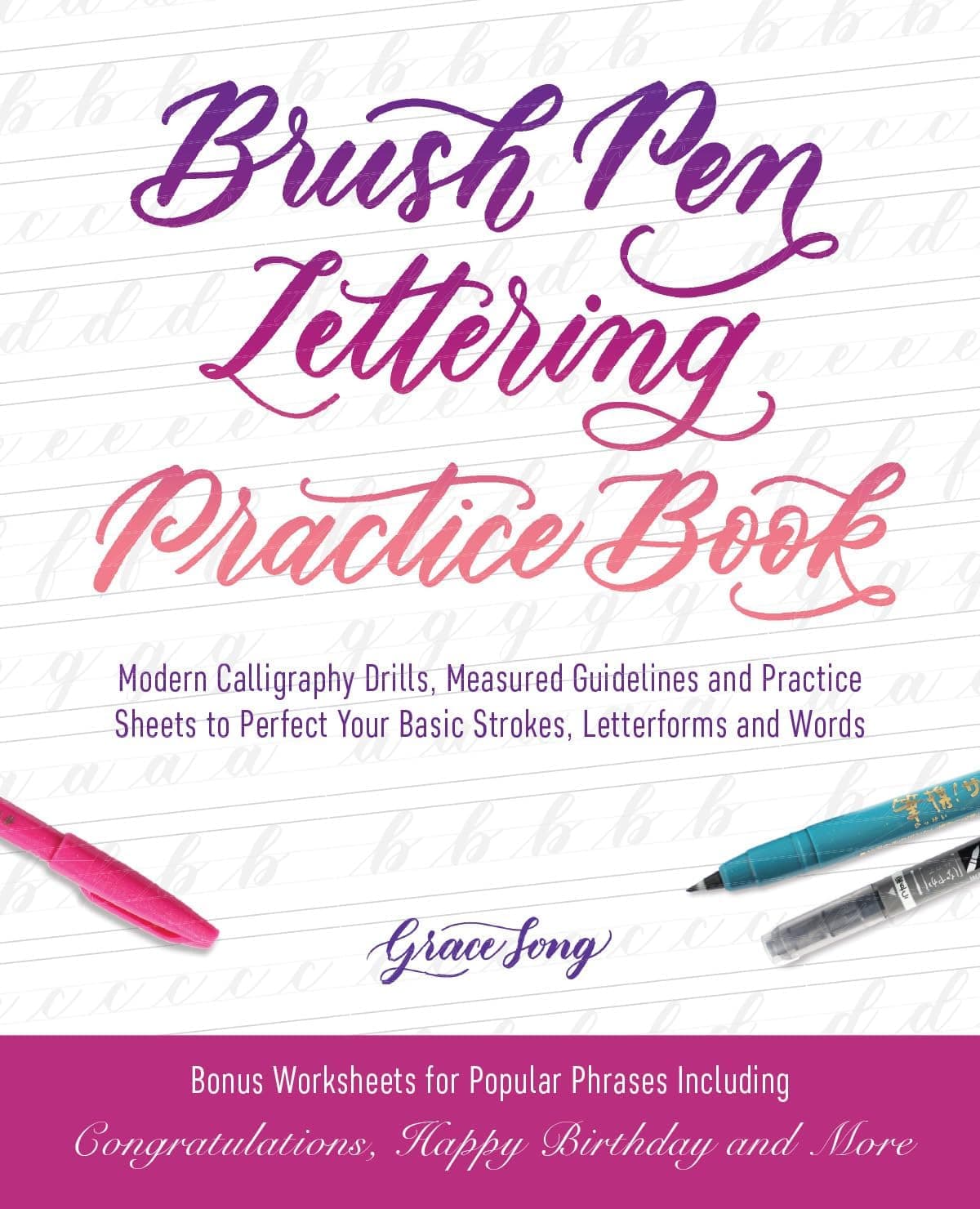
There is a difference between practicing calligraphy and merely doing calligraphy, and it explains why some people improve dramatically in three months while others plateau for years. Filling pages with your favorite words in your comfortable style feels productive, but it mostly rehearses what you can already do. Effective practice is narrower, slightly uncomfortable, and diagnostic: it identifies the specific thing your hands do wrong and attacks that thing until it stops happening. The principles of deliberate practice apply to lettering exactly as they do to music or sport.
Structure each session in three parts. Open with five minutes of warm-up drills, loose ovals, downstrokes, and figure eights, to get ink flowing and shoulders relaxed. Spend the middle twenty minutes on one focused goal, and only one: consistent oval slant, smoother underturn transitions, entry strokes on the letter a, whatever your current weakest link is. Close with five minutes of free lettering, writing whatever you enjoy, which consolidates the session and keeps the hobby fun. The middle block is where growth happens, and picking a single target is what makes it work. A session aimed at everything improves nothing.
Diagnosis comes before drilling. Take a recent page of your lettering and study it like an editor, not an artist. Circle the letters that look off, then ask what stroke inside them failed. A lumpy letter o is an oval problem. A wobbly m is an overturn problem. Ragged thin lines are an upstroke speed problem. Most alphabets that look broadly bad are actually two or three specific strokes failing everywhere at once, and fixing those strokes lifts every letter containing them. Write your diagnosis at the top of the next practice page so the session has a thesis.
Use guidelines relentlessly, even after you feel you have outgrown them. Printed or penciled guidelines controlling x-height, slant, and spacing remove three variables so your attention can go to stroke quality. Practicing without them means your muscle memory encodes a slightly different size and slant every session, which is why guideline-free practice often feels fine in the moment but produces inconsistent work. When you do want to test yourself, remove one variable at a time: keep the slant lines but drop the x-height rules, and see what holds.
Slowness is a feature, not an embarrassment. Calligraphy is drawing, not writing, and accomplished calligraphers work far more slowly than observers expect, often pausing completely between strokes. Speed at the cost of form trains errors. A useful rule is to letter at the pace where you could stop the stroke at any moment, and to lift the pen between strokes rather than pushing through full letters in one motion. Fluency and rhythm arrive on their own after form is stable, and they arrive faster when you never practiced sloppiness.
Finally, make progress visible, because motivation feeds on evidence. Date every practice sheet and keep them, or photograph one fixed test word at the end of each week under similar conditions. Rewriting the same pangram monthly gives you a controlled comparison that shows changes your daily eye cannot see. Pair that with honest volume tracking, and a modest schedule of twenty minutes five days a week will outperform weekend marathons every time, because motor learning consolidates during the rest between sessions. Practice that is short, targeted, slow, and tracked is the entire secret, and it is available to anyone.