Tombow Fudenosuke Brush Pen, Soft Tip, Black Review (2026)
Updated September 20, 2026 · Research-based review
Our verdict
The soft tip Fudenosuke is a small, flexible brush pen built for expressive brush lettering once the basics are comfortable. The main strength is the strong thick-to-thin line contrast it produces; the trade-off is that the softer tip is harder to control than the hard tip version for a first-time brush letterer.
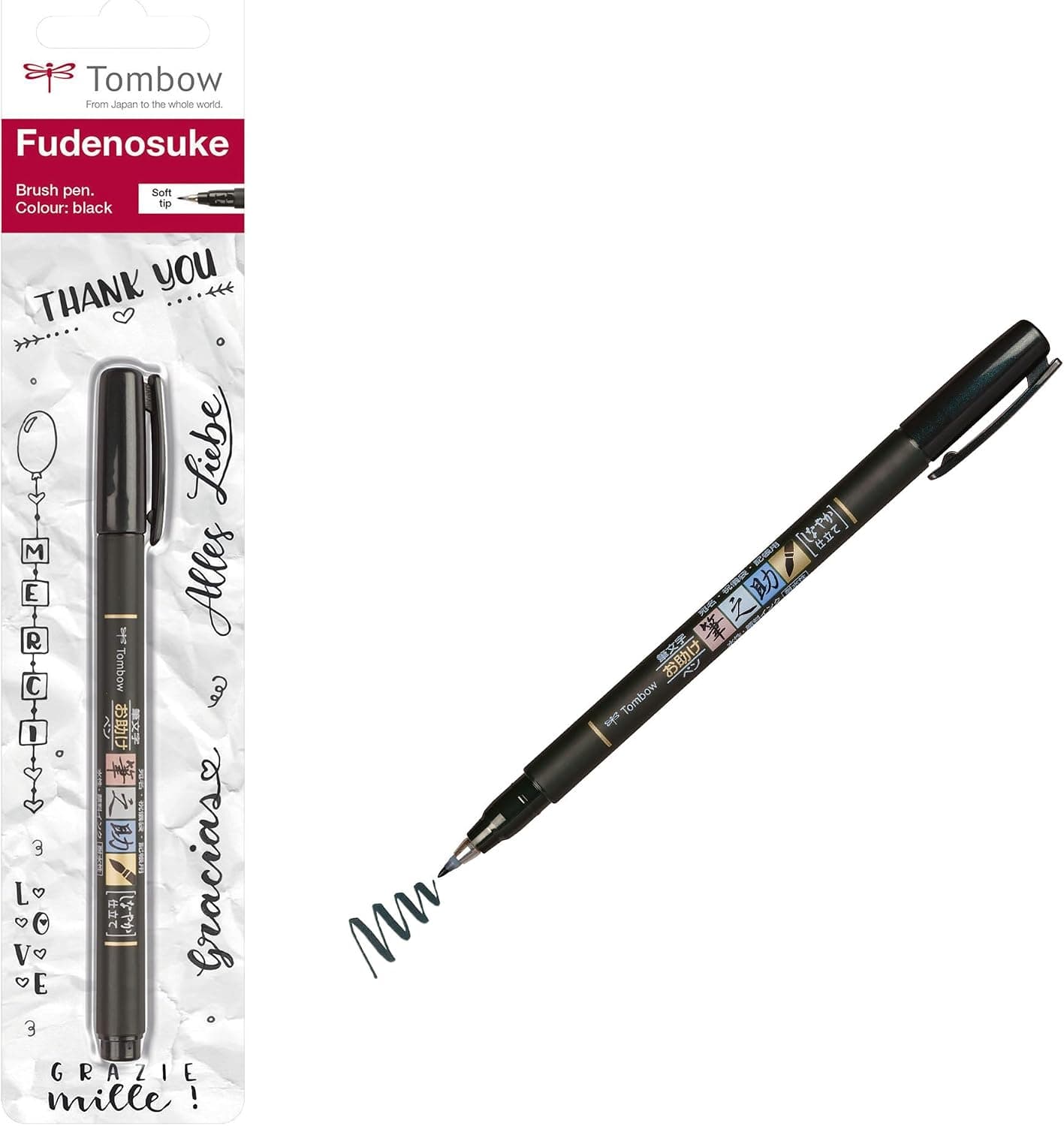
The soft tip Tombow Fudenosuke, a flexible small brush pen for more expressive brush lettering.
Price range: See on Amazon
What we liked
- + Soft tip creates stronger thick and thin contrast
- + Great next step after mastering the hard tip version
- + Compact size is ideal for planners and envelopes
Trade-offs
- - Softer tip is harder for beginners to control
- - Tips wear faster if used on rough paper
What it is
The Tombow Fudenosuke Soft Tip is a single brush pen with water based, pigmented black ink and a flexible elastomer brush tip designed to respond to changes in hand pressure. Light pressure produces fine, thin lines while pushing down harder widens the stroke, which is the mechanism behind the thick and thin contrast that defines brush lettering styles. The barrel is made from recycled polypropylene plastic, the pen is compact enough to fit easily in a pencil case or planner pocket, and the ink is odorless, which matters for anyone using it for extended sessions in a shared space like a classroom or office.
Tip behavior
This soft tip version produces lines that generally range from roughly 0.3 millimeters at their thinnest up to about 1.3 millimeters at their widest, giving a noticeably springier, more flexible feel than the hard tip Fudenosuke sold alongside it. That flexibility is what allows more dramatic contrast between upstrokes and downstrokes, which is central to the brush lettering look many letterers are chasing. The trade-off is that a softer tip is inherently less predictable to control, since small variations in pressure or angle show up more visibly in the stroke than they would with a stiffer tip.
Learning curve
Tombow itself, along with many lettering instructors, generally recommends starting brush lettering practice with the hard tip Fudenosuke before moving to this soft tip version, since the stiffer tip is more forgiving of inconsistent pressure while a letterer is still building muscle memory for basic strokes. Once those fundamentals feel natural, the soft tip becomes a way to push further into expressive, exaggerated stroke contrast that the hard tip cannot produce as dramatically. Someone picking up brush lettering for the very first time may find this particular pen more frustrating than rewarding until they have some practice under their belt.
Paper and durability
Manufacturer guidance recommends using this pen on smooth, non-textured paper rather than rough or heavily toothed surfaces, since a textured page can fray the tip's fibers faster and shorten the pen's usable life. The tip is not designed to be refilled, so once the ink runs out or the tip wears down significantly, the pen is meant to be replaced rather than serviced. Choosing smoother lettering or practice paper, and avoiding unnecessary heavy pressure once the ink starts running low, are the main ways to get consistent performance out of the tip for as long as possible. Storing the pen tip-up or capped tightly when not in use also helps prevent the ink from drying out at the very point of the brush, which keeps the first strokes of a session from starting out patchy or dry.
Who it suits
This pen suits letterers who already have some brush pen experience, likely with the hard tip Fudenosuke or a similar pen, and who want to add more dramatic stroke contrast to their lettering. It is also a practical size for carrying in a bag, planner, or pencil case for on-the-go practice. It is a weaker starting point for someone who has never used a brush pen before, since the softer, springier tip takes more control to manage than a hard tip pen does while the fundamentals of brush lettering are still being learned.
Frequently asked questions
Should a beginner start with the soft tip or hard tip Fudenosuke?
Most guidance suggests starting with the hard tip version first, since it is more forgiving, and moving to the soft tip once basic brush lettering strokes feel comfortable.
What line width can this pen produce?
The soft tip generally produces lines from roughly 0.3 millimeters at the thinnest up to about 1.3 millimeters at the widest, depending on pressure.
Can this pen be refilled?
No, it is a non-refillable pen, so once the ink is used up or the tip wears down, the pen is meant to be replaced.
What paper works best with this pen?
Smooth, non-textured paper is recommended, since rough or heavily textured paper can fray the brush tip more quickly.
Prices change often, so check the current price and availability on Amazon.
Check price on AmazonCalligraphy Nest may earn a commission from the link above.