Tombow 62038 Fudenosuke Brush Pen, 2-Pack - Soft and Hard Tip for Calligraphy and Art Drawings Review (2026)
Updated September 14, 2026 · Research-based review
Our verdict
Pairing the soft and hard tip Fudenosuke in one pack is the easiest way to feel the difference between the two and decide which suits your hand. Both pens use the same reliable water based black ink, but this set offers no color options, so it stays a practice and everyday lettering tool rather than a full art set.
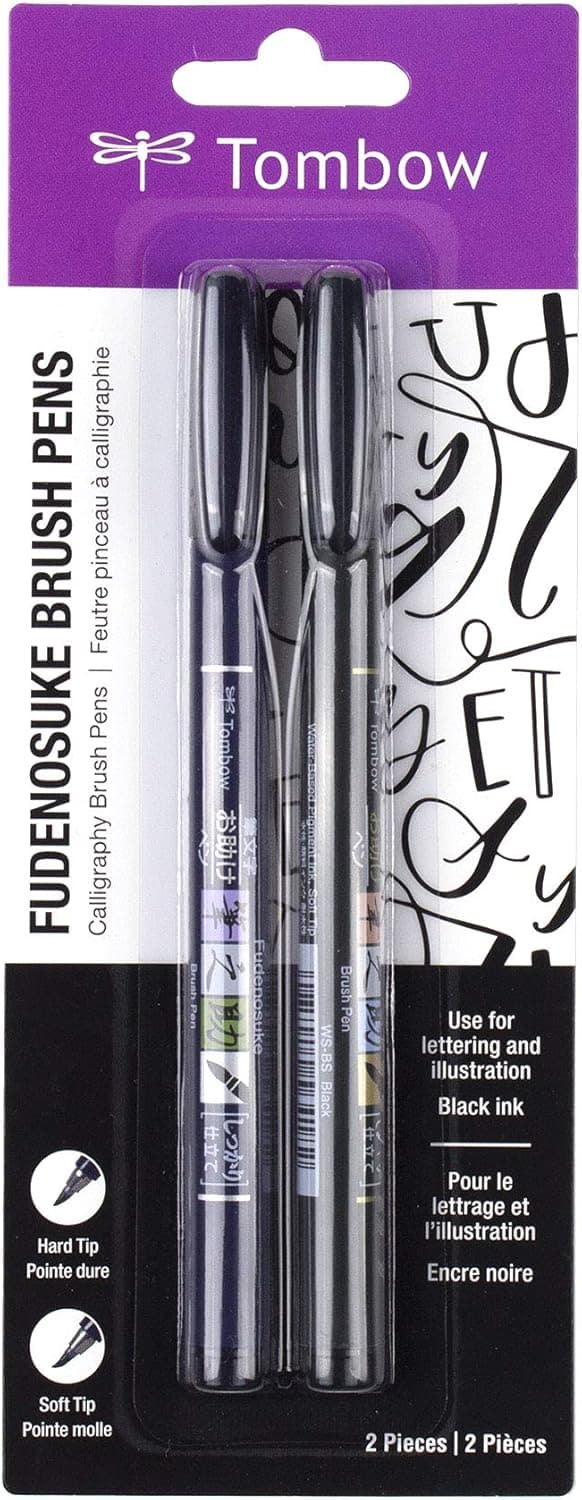
A 2-pack of Tombow Fudenosuke brush pens with one soft and one hard tip for small brush lettering.
Price range: See on Amazon
What we liked
- + Soft and hard tip pair lets beginners compare feel easily
- + Small tips suit envelopes, planners and cards
- + Tombow is a trusted lettering brand
Trade-offs
- - Black ink only in this pack, with no colour options
- - Small brush size is not ideal for large lettering
Who this two-pack is for
This pack bundles the soft tip and hard tip versions of the Tombow Fudenosuke brush pen, letting a beginner compare both without buying them separately. The soft tip is more flexible and produces a wider range of line widths with lighter pressure, while the hard tip is firmer and gives more predictable control, which many new letterers find easier when they are still learning to vary pressure for thin upstrokes and thick downstrokes. Because both pens are small and precise, this set fits envelope addressing, planner and journal lettering, greeting cards, and practice sheets more naturally than large poster style lettering. It suits anyone starting brush lettering who is unsure whether they prefer a springier or firmer nib feel.
Tip design and ink explained
According to Tombow's own specifications, the soft tip produces lines from about 0.3mm to 1.3mm while the hard tip produces a slightly narrower range from about 0.2mm to 1.2mm, both changing width with pressure rather than a fixed nib size. Both pens use water based, pigmented black ink that is described as odorless, and the barrels are non-refillable, so each pen is used until the ink runs out and then replaced. Because the ink is pigment based rather than dye based, it tends to hold up better against light and water once dry compared with cheaper dye ink brush pens, which matters for finished lettering pieces that will be kept or displayed.
Getting comfortable with brush pen control
New users typically start by practicing basic strokes, pressing down for thick downstrokes and lifting to a light touch for thin upstrokes, and the hard tip in this pack is often recommended as the easier starting point because it resists splaying and gives more consistent results while the hand is still learning pressure control. Once that control feels natural, switching to the soft tip opens up more dramatic thick and thin contrast for expressive lettering styles. Because the tips are small, both pens work well on smooth paper like marker paper or tracing paper, and Tombow's own guidance notes they are not intended for regular copy paper, which can fray the fiber tip faster.
Trade-offs and how it compares
The clear limitation is color. This pack is black ink only, so anyone wanting colored brush lettering will need a separate set such as the Tombow Fudenosuke Colors line or another brand entirely. It is also a small brush size, better suited to cards and journals than large scale lettering or signage. Compared with rival small brush pens in the same guide, such as the Pentel Arts Sign Pen Touch which offers assorted colors, this Tombow pack wins on brand consistency and the direct soft versus hard comparison but loses on color variety. Against the single hard tip pen sold alone, the value here is getting both feels in one purchase for a modest step up in price.
Verdict for different letterers
For someone who has never tried a brush pen and wants to figure out their preferred tip feel before committing to a full set, this two pack is a sensible low risk purchase. Letterers who already know they prefer a firm, controlled tip may be better served buying the single hard tip pen and saving the difference, while those chasing color variety should look at a colored brush pen set instead. As a foundational practice tool for envelope and card lettering, it remains one of the most recommended combinations in the beginner brush lettering community.
Frequently asked questions
What is the difference between the soft and hard tip Fudenosuke?
The hard tip is firmer and gives more control for consistent thin lines, producing roughly 0.2mm to 1.2mm strokes, while the soft tip is more flexible and covers about 0.3mm to 1.3mm, making dramatic thick and thin contrast easier.
Is the ink in this pen waterproof once dry?
Tombow describes the ink as water based and pigmented, which holds up reasonably well once dry, though it is not marketed as fully waterproof, so testing on your paper is wise for finished pieces.
Can this pen be refilled?
No, both pens in this pack are non-refillable and are replaced once the ink is used up.
Is this brush pen good for beginners?
Yes, the hard tip in particular is commonly recommended as a beginner-friendly starting point because it offers more predictable control while learning pressure technique.
Prices change often, so check the current price and availability on Amazon.
Check price on AmazonCalligraphy Nest may earn a commission from the link above.