How to Start Watercolor Painting: What to Buy and What to Practice First
Published How we research
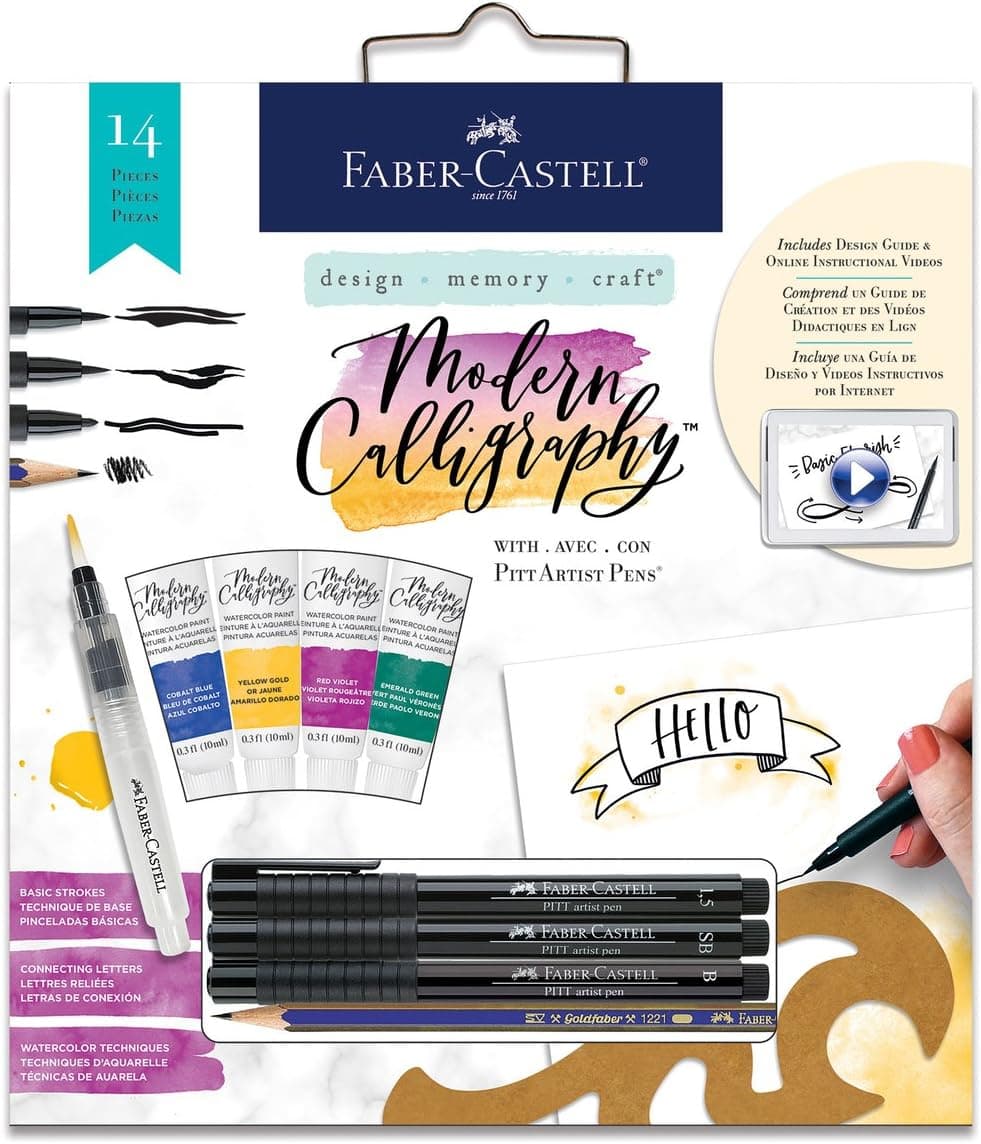
Start watercolor with a small pan set, two or three round brushes, a block or pad of real watercolor paper and a jar of clean water, then spend your first sessions on flat washes and gradients before attempting any picture. Everything else can wait. This guide covers what to buy, how to handle water and paper, which exercises build control fastest, and how to bring watercolor into hand lettering once the basics feel comfortable.
Products from this article
The highest-scoring picks from the buying guides this article links to. Scores are our editorial assessment, not customer ratings.
+ Liquid format fills dip pens and brushes without mixing pans
From our guide: Best Watercolor Sets for Hand Lettering and Calligraphy
+ Block format is glued on all sides, so washes dry flat without taping
From our guide: Best Watercolor Paper for Lettering and Calligraphy
+ 72 colours offer a very large palette for lettering and art
From our guide: Best Water Brush Pens
+ Twenty-four glittery shades give a wide metallic range in one tin
From our guide: Best Watercolor Sets for Hand Lettering and Calligraphy


The short supply list that is enough
You do not need a large set. A pan set with 12 to 24 colors, two round brushes (a size 6 and a size 10 cover most work, plus a small size 2 for detail if you like lettering), a water jar, a paper towel or rag, and a pad or block of watercolor paper is a complete starter kit. A pencil and a kneaded eraser help for light sketching.
Skip the cheapest school-grade sets if you can. Student-grade paint from art brands has more pigment and less filler, so colors mix cleanly and lift off the page predictably. Artist-grade paint is nicer but is not required in the first months.
If you already own brush pens or a calligraphy setup, you have part of the toolkit: a water brush pen is a fine way to carry water and paint on the go, and a pen with waterproof ink gives you line work that will not smear under washes.
Choose paper before you choose paint
Paper causes more beginner frustration than paint does. Thin printer or sketch paper buckles when it gets wet and the pigment pools in the dents. Look for paper labeled for watercolor, typically 140 lb (300 gsm) weight, which stays flat enough for light to medium washes.
Cold press paper has a slight tooth and is the usual all-round choice. Hot press is smooth and suits fine detail and lettering, but it dries differently and lets water move faster, so beginners often find it harder to control. Blocks are glued on all four sides and keep the sheet flat while you paint. On a loose pad, tape the edges to a board with masking tape.
Cotton paper holds more water and forgives mistakes better than cellulose paper, but it costs more. For practice sheets, cellulose is perfectly fine.
Learn water control first
Watercolor behaves according to how wet the brush and the paper are. Three states matter: a wet paper surface where color spreads freely, a damp surface where it spreads a little, and dry paper where it stays exactly where you put it. Most beginner problems come from mixing these up, for example adding a wet blob to a half-dry area and creating a cauliflower-shaped bloom.
Load your brush with water first, then touch it to the pan and stir until the paint on the brush is the consistency of milk for a light wash or cream for a strong one. Mix a puddle on a palette instead of painting straight from the pan, so the color stays even across a whole shape.
Keep two jars if you can: one for rinsing dirty brushes, one for clean water to mix. Change the water when it turns muddy, because dirty water dulls every color you mix after it.
Three exercises that build control
Flat wash: tape off a rectangle, tilt the board slightly, and pull a loaded brush across the top. Add the next stroke so it overlaps the wet bead of the first, and keep going down. Aim for an even color with no streaks. Repeat until it feels easy.
Gradient wash: start with strong pigment at the top and add more water to the brush with each stroke, so the color fades toward the bottom. This teaches you how much water changes the value of a color, which you will use constantly in landscapes and skies.
Wet-on-wet blend: wet a patch of paper with clean water, then touch two colors into it and let them spread. Try it with a warm and a cool color. It is the technique behind soft backgrounds, and it is the basis of most watercolor lettering backdrops.
Paint simple shapes, not scenes
Once washes are steady, paint leaves, circles, simple fruit shapes and stripes of overlapping color. Let each layer dry fully before adding another on top, or the layers will merge. Working light to dark is the basic rule: watercolor is transparent, so you cannot paint a light color over a dark one to cover it.
Leave the white of the paper for highlights instead of trying to add white paint later. Planning where the lightest areas go before you start is one of the habits that separates clean watercolor from muddy watercolor.
Practice small. A page of postcard-sized sketches teaches more than one big painting you are afraid to ruin, and it uses very little paper and paint.
Adding lettering to your watercolor
Watercolor and lettering combine well. A common approach is to paint a soft wet-on-wet background, let it dry completely, then write a word or quote over it in waterproof ink or a brush pen. Use ink labeled waterproof or permanent, otherwise the line can bleed if it touches any damp spot.
Brush lettering with watercolor itself is also possible: mix a fairly strong puddle, use a round brush with a good point, and apply light pressure on upstrokes and heavier pressure on downstrokes. Practice the basic strokes on scrap paper first.
For lettering practice and gift cards, a smooth hot press sheet or a small card works best, since fine lines stay crisp.
Frequently asked questions
How much does it cost to start watercolor painting? A modest starter setup of a pan set, a couple of brushes and a paper pad is inexpensive compared with most art hobbies. Spend more on paper and brushes than on a huge set of colors, since those affect results most.
Do I need a lot of colors? No. Many painters work with a limited palette of a warm and cool version of each primary. Twelve colors are plenty, and mixing teaches you more about color than owning every shade.
Why does my paint look dull or muddy? The usual causes are dirty water, mixing too many colors together, or painting over a layer that has not dried. Use clean water, mix no more than two or three pigments, and wait for each layer to dry.
Can I use my calligraphy ink with watercolor? Only if it is waterproof once dry. Water-based dye inks and many fountain pen inks will reactivate and smear when a wash passes over them, so test a small patch first.
Popular right now
- Why Ink Will Not Flow From Your Dip Pen and How to Fix ItArticle
- Best Desk Easels and Slant Boards for Lettering and CalligraphyBuying guide
- Best Dual Tip Brush PensBuying guide
- Copperplate script explainedGlossary
- Best Calligraphy Gift Sets: Beautiful, Useful Kits Any Letterer Will LoveBuying guide
- Bleedproof paper explainedGlossary
Based on the last 28 days of search and visitor data.