Falling in Art 5-Position Wood Drafting Table Easel Drawing and Sketching Board, 16 1/2 Inches by 12 1/8 Inches Review (2026)
Updated September 14, 2026 · Research-based review
Our verdict
The Falling in Art 5-Position Wood Drafting Table Easel is a compact 16 1/2 by 12 1/8 inch beechwood board that tilts through five angles from flat to 75 degrees for a comfortable pen and wrist slope. It earns our score of 8.6 out of 10, though its size suits notebook-scale lettering better than large posters.
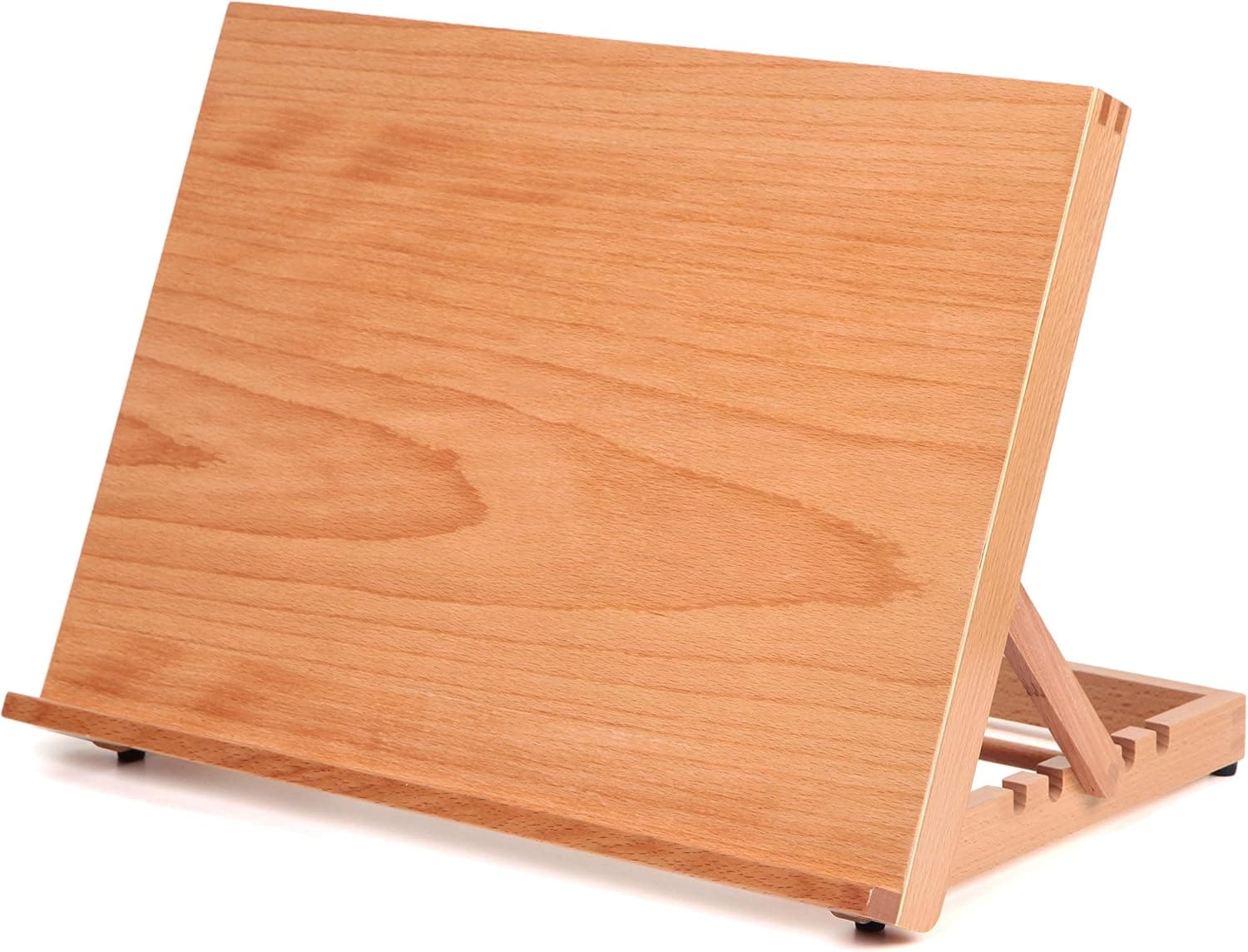
Falling in Art 5-Position wood drafting table easel, a 16 1/2 by 12 1/8 Inches drawing and sketching board.
Price range: See on Amazon
What we liked
- + Angled surface keeps nib and wrist in a comfortable writing position
- + 5-Position adjustment lets you pick the best slope for each hand
- + Wood board is sturdy enough for daily lettering sessions
Trade-offs
- - Board size is modest for large layouts and posters
- - Wooden surface may need a paper pad underneath for smooth writing
Who this easel fits
Letterers who work seated at a desk and want their paper propped at a comfortable slope, rather than flat on the table, are the main audience for this easel. The 16 1/2 by 12 1/8 inch board is sized for envelopes, cards, notebook pages and similar letter-scale pieces, so it suits daily practice sessions and small finished pieces rather than large layouts. Anyone dealing with wrist or neck strain from leaning over flat paper for long lettering sessions benefits from the angled surface, since it brings the writing plane closer to eye level and reduces the need to hunch. It also works well for beginners who are still finding a comfortable working angle, since five positions give enough range to experiment between a low slope for broad-edge pens and a steeper one for pointed-pen work. Letterers who regularly produce large posters or multi-page layouts will find the board too small and should look at a larger board instead.
Build, materials and adjustment range
The board is built from European beech wood, a hardwood that holds up to repeated use without the surface flexing or warping the way lighter composite boards can. At 1.9 pounds it is light enough to move between a desk and a shelf without being unstable once it is set up and angled. Five adjustable positions run from flat to roughly 75 degrees, covering everything from a nearly horizontal slope for broad-edge pens to a steep angle closer to an artist's easel for detailed pointed-pen work. Four non-slip rubber feet sit under the base to keep the board from sliding on a desk while lettering, which matters more than it sounds once a steeper angle is in use. The board folds flat for storage when the angled stand is not needed, keeping it out of the way between sessions.
Using it for daily lettering practice
Setting the board to a shallower angle works well for guideline-heavy practice sheets and broad-edge pens like Parallel pens, where a lower slope helps control ink flow, while a steeper setting suits pointed-pen and brush lettering where wrist position matters more. Because the surface is bare wood rather than a padded or laminated writing pad, some letterers find it helpful to lay a few sheets of paper or a thin pad underneath the top sheet for a slightly softer, smoother writing surface, particularly with pointed nibs that can catch on any texture in the wood grain. The rubber feet hold the board steady once an angle is chosen, so day to day the main routine is picking a position, propping paper against the board's edge or with removable clips, and adjusting between angles as the pen or project changes. Wiping the wood surface clean of stray ink and letting it dry fully before folding helps keep the board from picking up marks over time.
Trade-offs and how it compares with other boards
Against the U.S. Art Supply 18-1/2 by 14-1/8 inch A3 board, which offers a larger writing surface with six angle settings and a pencil ledge for holding tools, this Falling in Art board is the more compact and portable option, better suited to a smaller desk or for letterers who do not need the extra surface area. Compared with the Falling in Art Extra Large version at 29 1/2 by 19 2/3 inches, this smaller board trades working space for a lighter, easier to store package. The modest board size is the clearest limitation for anyone working on posters, large signage or multi-panel pieces, since there is not enough surface to lay out a big composition in one pass. The bare wood surface, while sturdy, is also less forgiving than a padded writing mat for very fine pointed-pen strokes unless paper is added underneath.
Verdict and who should pick something else
For everyday lettering practice and letter-scale finished pieces, this easel's five-position adjustment and beech wood build justify our score of 8.6 out of 10, and the compact footprint is an advantage on a crowded desk. It is a solid choice for anyone who wants a comfortable working angle without committing desk space to a full-size drafting board. Letterers who regularly work at poster scale, or who want a built-in pencil ledge and more surface area, should look at a larger board such as the U.S. Art Supply A3 easel instead.
Frequently asked questions
What angles does the Falling in Art easel adjust to?
It has five positions ranging from flat to roughly 75 degrees, letting you pick a shallow slope for broad-edge pens or a steeper one for pointed-pen work.
Is the board big enough for large posters?
No, at 16 1/2 by 12 1/8 inches it is sized for letter-scale pieces like envelopes and cards rather than large layouts, so a bigger board suits poster work better.
What is the board made from?
The surface is European beech wood, set into a stand with four non-slip rubber feet to keep it steady while lettering.
Does the wood surface need anything underneath the paper?
Some letterers add a thin pad or extra sheets under the top paper for a smoother feel, especially with fine pointed-pen nibs that can catch on wood grain texture.
Prices change often, so check the current price and availability on Amazon.
Check price on AmazonCalligraphy Nest may earn a commission from the link above.