RHODIA cf16559 Notepad, Dot Pad, No. 16 (A5), 80 Sheets, Dot Ruled, Water Repellent Cover, Perforated, Black Review (2026)
Updated September 21, 2026 · Research-based review
Our verdict
Best for fountain pen and pointed nib calligraphers who want ultra-smooth paper in a portable A5 pad. The main strength is Rhodia's famously smooth 80 gsm paper that lets nibs glide without catching. The trade-off is a pad format rather than a bound journal, and smooth paper that dries ink slowly for left-handed writers.
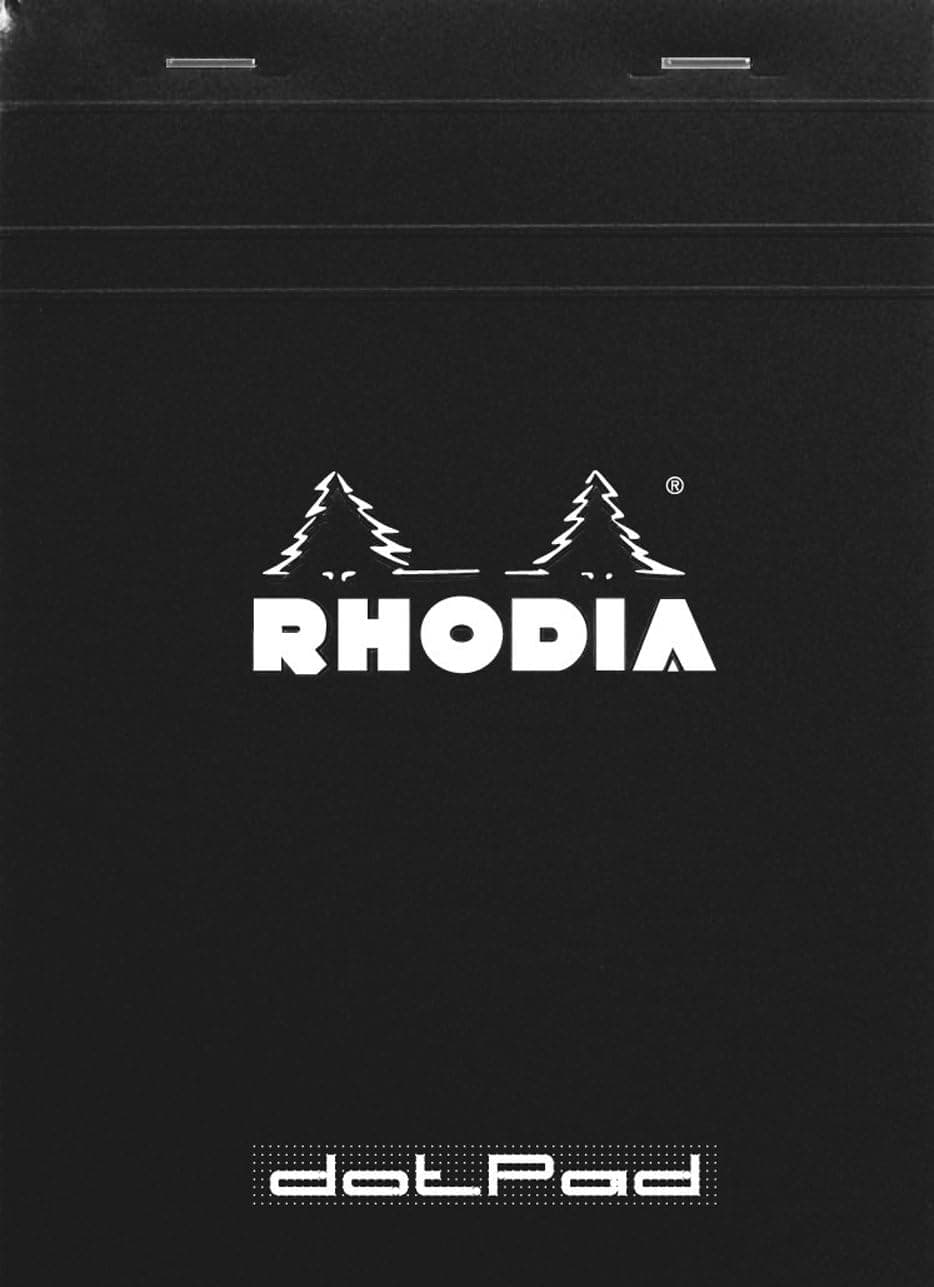
RHODIA No. 16 A5 dot pad with 80 perforated Sheets, dot ruled with a water repellent cover for pen and ink practice.
Price range: See on Amazon
What we liked
- + Rhodia paper is ultra smooth, so fountain pens and nibs glide
- + Perforated sheets tear out neatly for sharing or scanning
- + Water repellent cover protects the pad on a messy ink desk
Trade-offs
- - Smooth paper slows drying, so lefties can smear fresh ink
- - Pad format lacks the structure of a bound journal
Paper and format
This is Rhodia's No. 16 pad in the A5 size, roughly 5.8 by 8.3 inches, with 80 sheets printed with a 5 millimeter dot grid in a pale color rather than a heavy line. The paper weight is 80 grams per square meter, light for a notebook but treated with Rhodia's signature calendaring that gives it an unusually smooth, almost coated feel under a pen. The pad has a hard cardboard back that provides a stable writing surface even without a desk underneath, and every sheet is perforated along the top so pages tear away cleanly for scanning, sharing, or framing a finished piece without ragged edges.
How it performs with pens and ink
Rhodia paper has a strong reputation among fountain pen and dip nib users specifically because of how smoothly a metal nib glides across it, with minimal catching or feathering even from wetter inks. That smoothness comes with a tradeoff: the paper is not especially absorbent, so ink takes longer to dry fully on the page than it would on a more porous sheet. Right-handed writers moving left to right are less likely to notice, but left-handed calligraphers who drag their hand back across a line they just wrote can smear fresh ink before it sets. Anyone using very wet nibs or heavily saturated ink should plan for a few extra seconds of drying time per line.
Cover and durability
The black cover is described as water repellent, which protects the pad from splashes or damp desks during ink-heavy practice sessions, and the stapled construction keeps the sheets from shifting inside the cover during transport. Rhodia also notes the paper is PEFC certified, meaning it comes from responsibly managed forestry sources, which may matter to buyers who care about the environmental sourcing of their art supplies. Because this is a staplebound pad rather than a glued or sewn binding, it lies reasonably flat when opened, though not as flat as a true lay-flat notebook.
Pad versus bound journal
Being a pad rather than a hardcover bound journal is a deliberate tradeoff. Pads are lighter, cheaper per sheet in many cases, and built around the expectation that sheets will be torn out and used individually, which suits calligraphers practicing single words or phrases they want to keep separately or discard. That same format means the pad lacks the structure, page numbering, or long-term archive feel of a proper bound journal, so it is not the right pick for someone who wants one continuous notebook to look back through later. The dot grid itself, printed lightly rather than as a heavy guideline, is meant to assist spacing and alignment without dominating a finished piece the way solid ruled lines can.
Who this pad suits
This pad is a strong fit for pointed pen and fountain pen calligraphers who want smooth, reliable paper for practicing letterforms, layouts, or finished pieces they plan to tear out and keep separately. It also suits anyone who values a light dot grid for spacing without a fully ruled page. Left-handed writers using wet inks should budget extra drying time or consider blotting between lines. Anyone who wants a single running notebook to journal or practice in continuously, rather than loose sheets, would likely be better served by a bound dot grid notebook instead of this pad format.
Frequently asked questions
What is the paper weight of this Rhodia pad?
The sheets are 80 grams per square meter, a light but very smooth paper by Rhodia's own listing.
Does ink dry quickly on this paper?
The smooth surface that helps nibs glide also means it is not very absorbent, so wetter inks take longer to dry and left-handed writers may smear fresh lines.
Is this a bound notebook or a tear-out pad?
It is a staplebound, perforated pad, so sheets are designed to tear out cleanly rather than stay bound like a journal.
How many sheets does the pad include?
It includes 80 sheets in the A5 size with a 5 millimeter dot grid.
Prices change often, so check the current price and availability on Amazon.
Check price on AmazonCalligraphy Nest may earn a commission from the link above.