Old World Ink Iron Gall Ink (60ml/2oz Bottle) Review (2026)
Updated September 21, 2026 · Research-based review
Our verdict
Old World Ink's iron gall ink suits pointed pen calligraphers who want a traditional, oak gall based black with historical roots and crisp hairlines. It goes down pale and darkens as it oxidizes, and like other iron gall inks it can feather on absorbent paper, so it works best with a dip pen and smooth, sized stock.
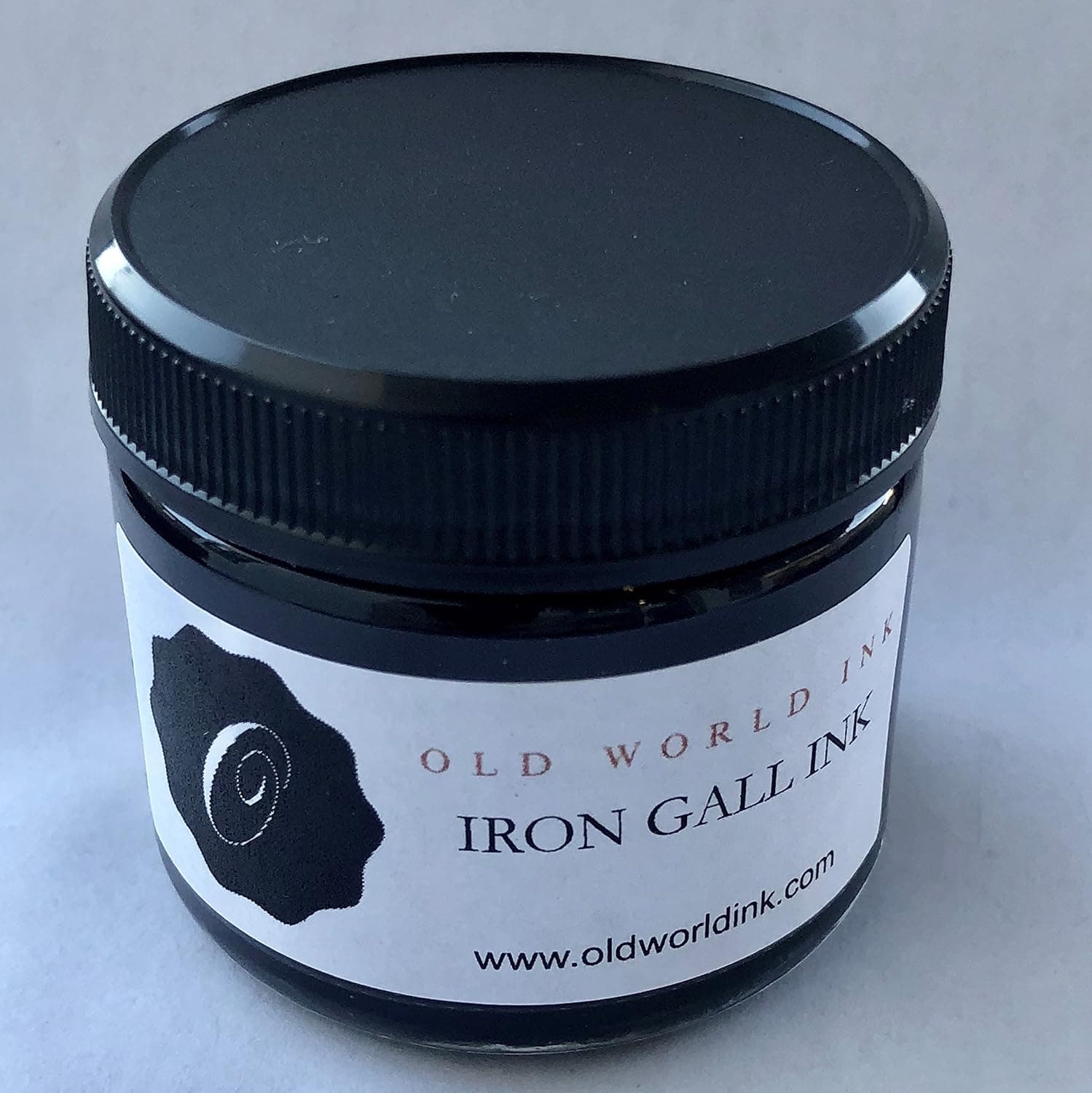
Old World Ink iron gall ink in a 60ml/2oz bottle, a traditional dip pen ink known for crisp, dark hairlines.
Price range: See on Amazon
What we liked
- + Thin, clean ink produces very fine hairlines with pointed nibs
- + Darkens to a deep black as it oxidizes on the page
- + 2oz bottle offers a good supply for regular practice
Trade-offs
- - Pale when first written, which makes judging stroke weight harder
- - Can feather on absorbent paper, so pair it with smooth, sized sheets
A handmade ink with centuries old roots
Old World Ink's Iron Gall Ink is a 60ml (2oz) bottle of handcrafted ink made using ingredients and methods based on historical iron gall recipes, which were the standard European writing ink for roughly 1,400 years, from the early medieval period into the 20th century. The formula combines oak galls and iron salts with gum arabic and dye for color and consistency, the same basic components used in traditional recipes for centuries. The maker markets it specifically for copperplate, Spencerian, and other pointed pen calligraphy styles, and it is sold through the maker's own shop as well as Amazon in a 2oz bottle, a reasonable supply for regular practice sessions and finished pieces alike. Because it is a small batch, handmade ink rather than a mass produced formula, some bottle to bottle variation in exact tone is possible, typical of historically styled inks.
How the ink writes and darkens
Like other oak gall and iron gall inks, this formula goes down comparatively pale and light when first applied to paper, then darkens as it oxidizes in the air, deepening toward a rich black over the following minutes and hours. That shift is a defining trait of the ink family rather than a flaw, but it does mean judging final stroke weight and contrast in the moment can be harder than with a dye based ink that reads at full strength immediately. Once fully developed, the finished writing is described as very black, with a thin, clean flow suited to fine, crisp hairlines from a pointed dip nib, the main reason calligraphers reach for iron gall inks over modern alternatives for copperplate and Spencerian scripts.
Paper choice matters
Because this is a thin, low viscosity ink rather than a thickened or gum heavy formula, it can feather or spread slightly on soft, absorbent paper the way many traditional iron gall inks do. Pairing it with smooth, sized paper built for pointed pen and dip pen work, rather than standard printer or notebook paper, will generally give cleaner lines and reduce the chance of feathering along thin hairline strokes. This is a common consideration across iron gall inks generally and is not unique to this bottle, but it is worth factoring into paper choice before starting a final piece rather than after ink has already bled into the fibers.
Fountain pens and care
Iron gall inks are more acidic than standard dye based writing inks, which is part of what gives them long term permanence, but it also means manufacturers and enthusiasts generally recommend against leaving this style of ink sitting in a fountain pen for extended periods, since it can corrode metal parts over time. This ink is intended primarily for dip pens and other traditional calligraphy tools rather than fountain pens, which sidesteps that concern entirely for most buyers. Anyone using a dip nib with this ink should still rinse it after each session, both to keep the nib performing well and to avoid a buildup of dried pigment in the tines. This is a small, specialty ink made in limited batches, so it tends to sell through a seller's own shop and marketplace listings rather than big box art retailers, and buyers should expect occasional restocking gaps rather than the steady availability of a mass produced brand.
Who should buy this ink
This ink is a good fit for pointed pen calligraphers practicing copperplate or Spencerian scripts who want an authentic, small batch iron gall ink rather than a modern dye based black. It rewards patience, since the color needs a few minutes to fully darken, and pairs best with smooth, sized paper to avoid feathering. Calligraphers who want instant, full strength black straight off the nib, or who plan to use the ink in a fountain pen, may be better served by a standard dye based calligraphy ink instead. Beginners still building confidence with a pointed nib, or anyone who prefers an ink that reads at full strength the instant it touches paper, will likely find a modern dye based black more forgiving to start with before working up to the traditional oak gall chemistry this bottle represents.
Frequently asked questions
Why does the ink look pale right after writing?
Iron gall inks like this one go down light and darken as they oxidize in the air, so the finished color takes a few minutes to reach its full, deep black.
Can I use this in a fountain pen?
It is intended primarily for dip pens and other calligraphy tools; iron gall inks are acidic and generally not recommended for extended use in fountain pens because they can corrode metal parts.
Will this ink feather on regular paper?
It can feather or spread slightly on soft, absorbent paper, so smooth, sized paper made for pointed pen work will give cleaner results.
How much ink comes in a bottle?
It ships in a 60ml (2oz) bottle, enough for regular practice sessions and multiple finished pieces.
Prices change often, so check the current price and availability on Amazon.
Check price on AmazonCalligraphy Nest may earn a commission from the link above.