Rohrer & Klingner 50 ml Bottle Fountain Pen Ink, Iron Gall Nut-Ink, Salix Review (2026)
Updated September 21, 2026 · Research-based review
Our verdict
Salix is a German made iron gall ink for calligraphers who want a blue that darkens toward blue black and dries water resistant. It gives crisp hairlines from a pointed dip nib, but the acidic iron gall formula can corrode steel nibs over time and needs cleaning out of any pen within about a week.
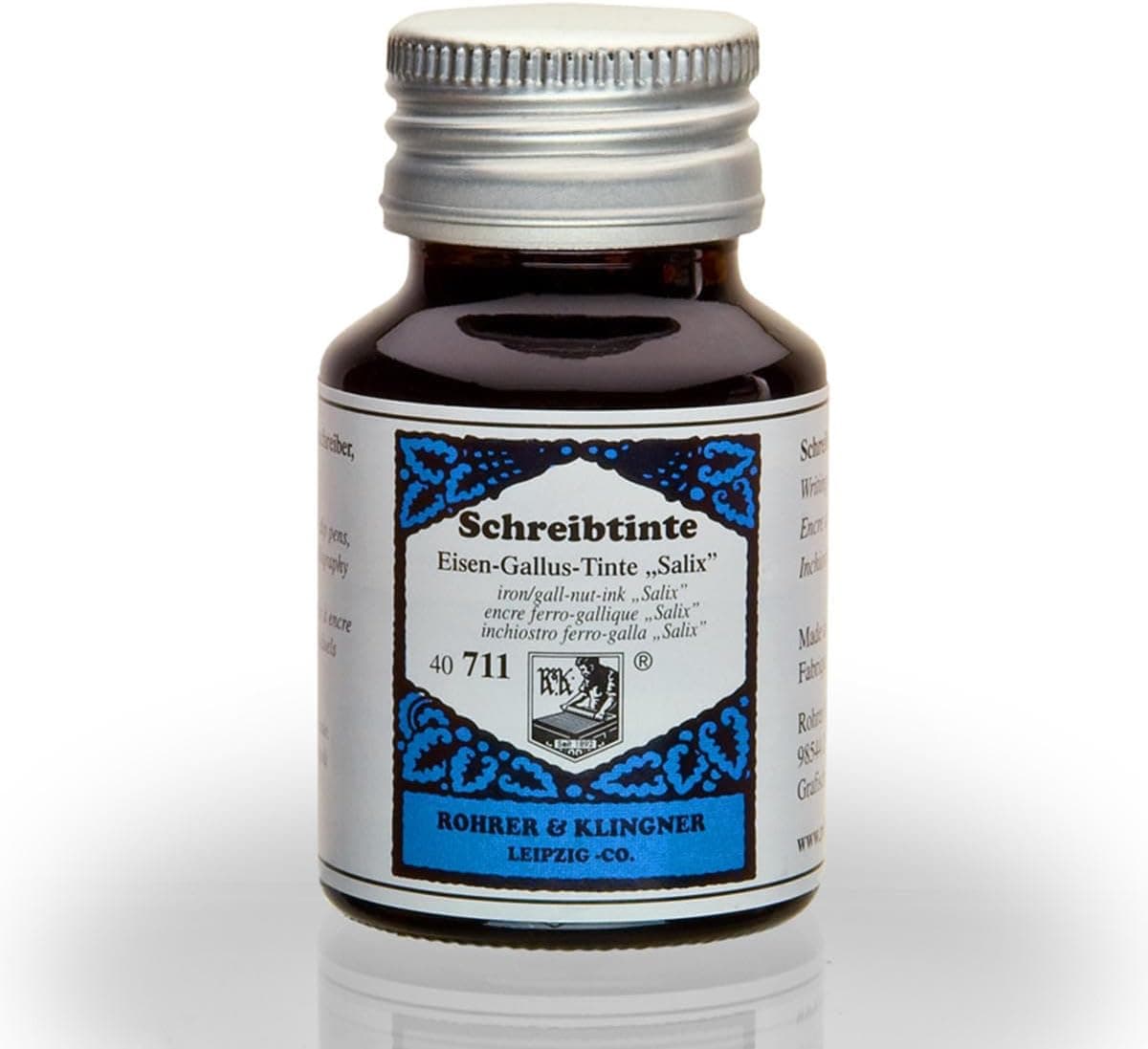
Rohrer & Klingner Salix iron gall nut ink in a 50 ml bottle, a blue-black that darkens as it dries.
Price range: See on Amazon
What we liked
- + Iron gall ink writes blue and darkens to a deep grey-black as it oxidizes
- + Water resistant once dry, which is useful for documents and journals
- + Thin, clean flow gives crisp hairlines with pointed dip nibs
Trade-offs
- - Iron gall ink can corrode steel nibs, so clean them after every session
- - Thin ink may feather on soft paper, so smooth paper is recommended
An iron gall ink from a long running German maker
Rohrer & Klingner Salix is a 50 ml bottle of iron gall ink made in Germany from iron salts and tannic acids, a formula that dates back centuries and was once the standard writing ink in Europe. The company describes it as an archival, water resistant ink once it has dried on paper, with no shimmer or fluorescent additive, just a straightforward writing ink built for permanence rather than novelty effects. It ships in a glass bottle with roughly a 0.85 inch opening, wide enough to dip a pointed nib without much trouble. Rohrer & Klingner markets this as suitable for pens, quills, and other calligraphy instruments, and it is a common recommendation among pointed pen calligraphers who want a traditional ink with genuine historical roots rather than a modern dye based alternative.
How the color develops
Salix goes down noticeably brighter blue when wet and then darkens as it oxidizes in the air, settling into a soft, dusky blue that can lean toward a deep blue black at its darkest. That color shift is a defining trait of iron gall inks generally, and it means a finished piece can look meaningfully different an hour after writing than it did the moment the ink hit the page. Reviewers testing the ink on both fine and standard paper reported no feathering or bleed and strong water resistance once dry, useful for documents, journals, or artwork that might later be exposed to a light splash. For calligraphers using pointed dip nibs, the ink's thin, clean flow is generally described as producing crisp, fine hairlines rather than a heavy, saturated line.
The tradeoff with iron gall chemistry
Iron gall inks are more acidic than typical fountain pen or dip pen inks, and that acidity is part of what makes them archival and water resistant, but it also means they can corrode steel nib parts if left sitting for too long. The manufacturer specifically recommends not leaving Salix in a pen for longer than about a week, and general guidance for iron gall inks calls for cleaning any pen used with it roughly every seven days to avoid staining or damage. This matters less for calligraphers who dip a nib, use it for a session, and rinse it afterward, and more for anyone considering loading it into a fountain pen or leaving a dip nib soaking. Given the corrosion risk, it is worth reserving this ink for a workhorse pen or nib rather than a valuable vintage one.
Working with the ink day to day
Because Salix is a thin, low viscosity ink rather than a lubricated or fast drying formula, it behaves the way calligraphers expect from a classic iron gall ink: clean flow, fine hairlines, and a gradual color shift rather than instant saturation. That thinness is generally an advantage for pointed pen hairline strokes, though it does mean the ink can look pale in the first moments after writing until it starts to oxidize and darken. Rohrer & Klingner has also been transitioning some of its bottle caps from metal to plastic, so buyers may receive either version depending on current stock, which does not affect the ink itself.
Who should buy Salix
Salix suits pointed pen calligraphers and fountain pen ink enthusiasts who want an authentic iron gall ink with a color that develops over time, along with genuine water resistance and archival permanence once dry. It is a good match for anyone comfortable rinsing a nib regularly who is not planning to leave the ink sitting in a pen for extended periods. Buyers who want a completely worry free ink with no corrosion considerations, or who plan to load it into a valuable vintage pen, may be better served by a standard, non iron gall calligraphy ink instead.
Frequently asked questions
Is Salix ink safe for fountain pens?
It can be used in a fountain pen, but the manufacturer recommends not leaving it in the pen for longer than about a week, since the acidic iron gall formula can stain or corrode parts over time.
What color does Salix write?
It goes down a brighter blue when wet and darkens as it oxidizes, settling into a dusky blue that can lean toward blue black at its darkest.
Is this ink waterproof once it dries?
Reviewers found it highly water resistant on both fine and standard paper once fully dry, typical for iron gall ink formulas.
How often should I clean a nib used with iron gall ink?
General guidance for iron gall inks like Salix is to clean the pen or nib roughly every seven days to prevent staining or corrosion.
Prices change often, so check the current price and availability on Amazon.
Check price on AmazonCalligraphy Nest may earn a commission from the link above.